Françoise Gilot: The woman who left Picasso and painted her own life
There are stories in art history that seem already written for us.
A young artist meets a genius. She becomes his muse. Her name dissolves into his legend. But Françoise Gilot refused that script. Her life is not the story of a woman who loved Pablo Picasso. It is the story of a woman who left him and then spent seventy years proving that this was only the beginning.
Paris, 1943: not a muse, but an artist
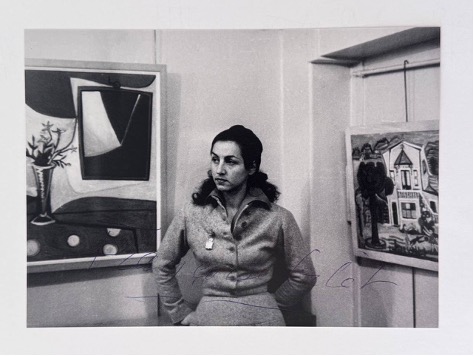
When Gilot met Picasso in 1943, Paris was still under occupation. The encounter has often been romanticised, but one detail is essential: She was already an artist.
Born in 1921 into a disciplined bourgeois family, she studied law to satisfy her father, but attended painting classes in secret. This dual formation, rigor and rebellion, would define her entire life.
Picasso saw her immediately. But unlike others around him, she did not surrender her identity to his gaze. From the very beginning, she remained quietly, firmly herself.
Living with a legend and refusing to become one of his creations
Their life together unfolded in the South of France, in Vallauris, a world of light, ceramics, and intense creative energy.
They had two children, Claude Picasso and Paloma Picasso. But life with Picasso came with a gravitational pull few could resist. He shaped everything around him – art, atmosphere, relationships. Many women in his life, including Dora Maar, paid a high emotional price for that proximity.
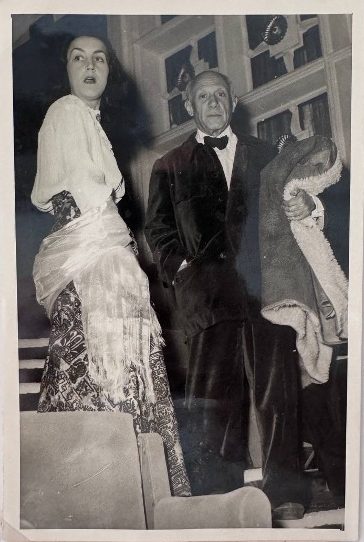
Gilot did something almost unimaginable. In 1953, she left. No scandal. No drama. Just a decision. Picasso is said to have told her: “No one leaves a man like me.”
History quietly proved otherwise.
After Picasso: the real work begins
If her years with Picasso are often told, her years after him are where her true artistic identity emerges.
Freed from his orbit, Gilot did not react, she refined.
Her work evolved toward:
Where Picasso often dismantled form, Gilot rebuilt it. Her paintings carry a sense of inner order as if each line knows precisely where it belongs.
She explored recurring dualities:
There is a quiet philosophy in her work: not the drama of destruction, but the discipline of harmony.
Writing her own narrative
In 1964, Gilot published the book Life with Picasso.
It was more than a memoir. It was an act of authorship.
Picasso tried to stop its publication. He failed. The book became an international bestseller, offering a rare, lucid portrait of life inside the myth without bitterness, without submission. And with that, Gilot achieved something even rarer than artistic success: She controlled her own narrative.
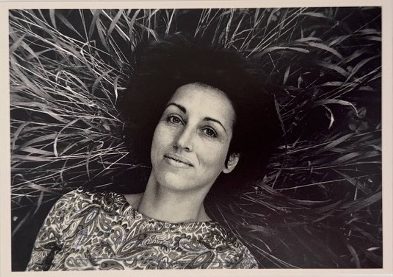
A Different kind of partnership
Later, her life took an unexpected turn.
She married Jonas Salk, the scientist who developed the polio vaccine. Their world split between New York and California was radically different from Picasso’s.
Near the Salk Institute, overlooking the Pacific, Gilot found a new rhythm:
intellectual clarity, emotional stability, and sustained artistic work. It is tempting to see this as contrast art and science, chaos and order. But for Gilot, it was continuity. She had always sought structure.
Where to see Françoise Gilot today
Today, Gilot’s work is no longer a footnote, it is part of the canon.
You can encounter her art in major institutions:
Her works also appear regularly at
Sotheby’s and Christie’s, where a steady reassessment of her importance is underway.
Collectors today are no longer asking: “Was she close to Picasso?”
They are asking: “Why did we overlook her for so long?”
The Picasso Question
Did Picasso try to block her career?
Not officially.
There is no documented ban, no formal prohibition.
But influence does not require paperwork. Picasso’s presence in the art world was immense. His opinions shaped networks of dealers and collectors. After Gilot left him (and especially after her memoir) some galleries hesitated.
Call it loyalty. Call it fear. Call it gravity. And yet, the most important fact remains:
She built a career anyway.
Exhibitions continued. Collectors emerged. Decades passed and her work endured.
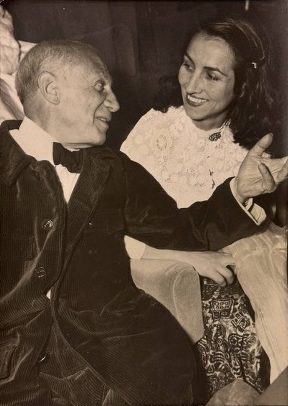
A life in full
Françoise Gilot lived almost to 102 years.
She painted into her nineties. She wrote, exhibited, evolved.
She was never only:
She was something far more difficult to achieve: independent.
ANNO Media Reflection
In a century that often defined women by proximity to power, to fame, to men Gilot chose distance. Not distance from art. But distance from definition.
Her story speaks not only to art history, but to something broader:
The courage to leave
The discipline to rebuild
The patience to become
And perhaps that is her greatest work of all.
She did not escape Picasso.
She outlived the idea that she ever needed him.
Related Posts