Cultural Capital of March: Kyoto
京にても
京なつかしや
ほととぎす
Even in Kyoto –
how I long for Kyoto
when the cuckoo calls.
This is a haiku by Basho. And it’s paradox. Even while present in the city, he feels nostalgia. That is Kyoto, a place that turns presence into memory instantly and our Cultural Capital for March.
There are cities that announce themselves. And there are cities that unfold slowly like silk. In March, Kyoto does not bloom. It prepares to. And that preparation, that pause before revelation may be the most refined form of beauty.
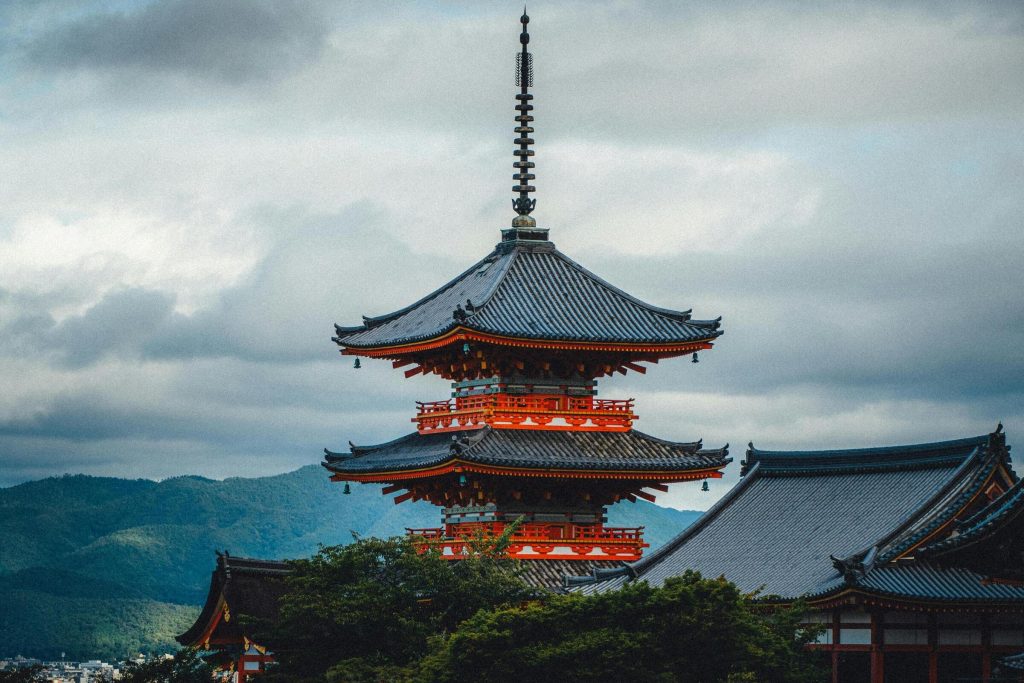
Kyoto by Liuuu _61
The Capital That Never Abdicated Culture
For more than a millennium, Kyoto was the imperial heart of Japan. When political authority shifted to Tokyo in the 19th century, something essential remained here: ritual, memory, aesthetic discipline.
Kyoto is not monumental in the European sense. It does not overwhelm like Rome or astonish like Paris. It whispers.
The golden reflection of Kinkaku-ji in still water.
The endless vermilion procession of gates at Fushimi Inari Taisha.
The disciplined emptiness of the rock garden at Ryoan-ji.
The vertical silence of the Arashiyama Bamboo Grove.
Everything here teaches proportion. Restraint. Intention. Kyoto does not attempt to impress the world. It perfects itself instead.
March: The Philosophy of “Almost”
In Europe, spring arrives like a proclamation. In Kyoto, it arrives like a thought. The first sakura appear cautiously — pale, fragile, incomplete. The branches hold more promise than blossom. The air carries anticipation rather than spectacle.
The Japanese concept of mono no aware – the gentle awareness of impermanence is not theoretical in March. It is visible. The blossom is beautiful precisely because it will fall.
The season is powerful precisely because it hesitates. For those who build exhibitions about memory, who preserve postcards from vanished empires, who trace genealogies across centuries, Kyoto feels like a spiritual ally. It understands that continuity is built from fragile moments.
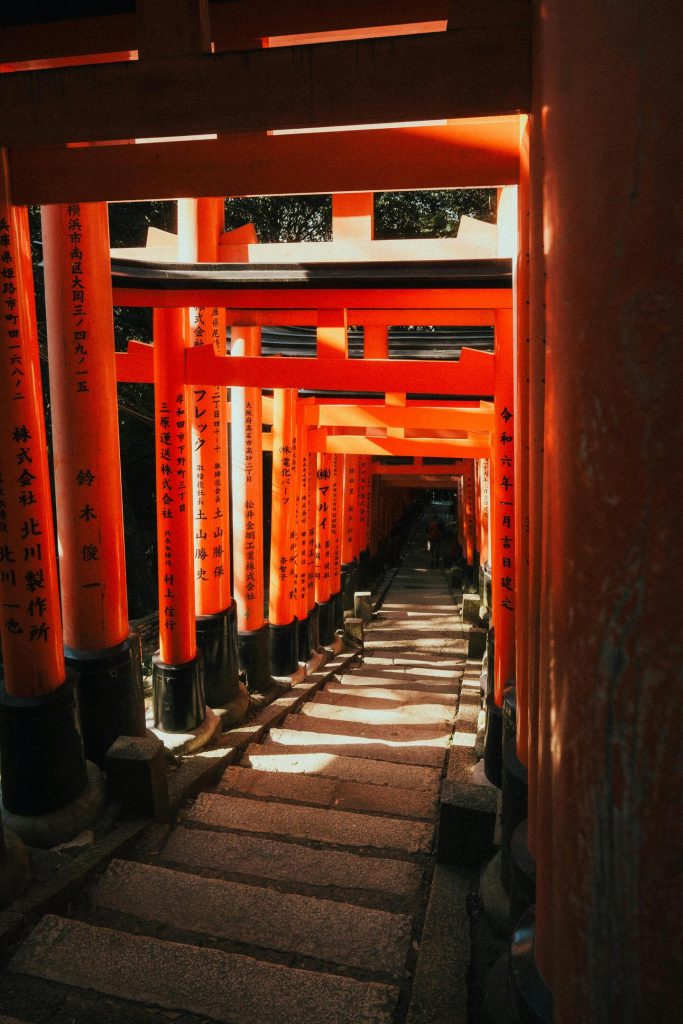
Torii path with a hanging lantern at Fushimi Inari-Taisha Shrine by Naro K
A City of Rituals
Kyoto moves according to ceremony. The tea ceremony is not about tea. It is about presence. The choreography of hands. The geometry of space. The respect for silence between gestures. Even walking through Gion at dusk catching a glimpse of a maiko disappearing behind wooden lattice feels like participating in something carefully preserved. Ritual, in Kyoto, is not nostalgia. It is infrastructure.
Kyoto and the World
The elegance of Japanese aesthetics once transformed Europe. The prints of Hokusai and Hiroshige reshaped the vision of Claude Monet and Vincent van Gogh. Flat perspective, bold contour, asymmetry what Europe once considered exotic became foundational to modern art. Kyoto demonstrates a profound truth: cultural influence does not require military power. It requires coherence. In a fragmented world, Kyoto’s consistency feels radical.
If You Walk Kyoto with a Child
March in Kyoto is not about ticking landmarks. It is about discovery.
Cycling along the Kamogawa River.
Feeding koi in temple ponds.
Learning how to bow correctly.
Buying handmade paper in small shops where craftsmanship still matters.
For a parent/parents and a child/children traveling together, Kyoto offers something rare: a city that invites conversation. Not stimulation – reflection.
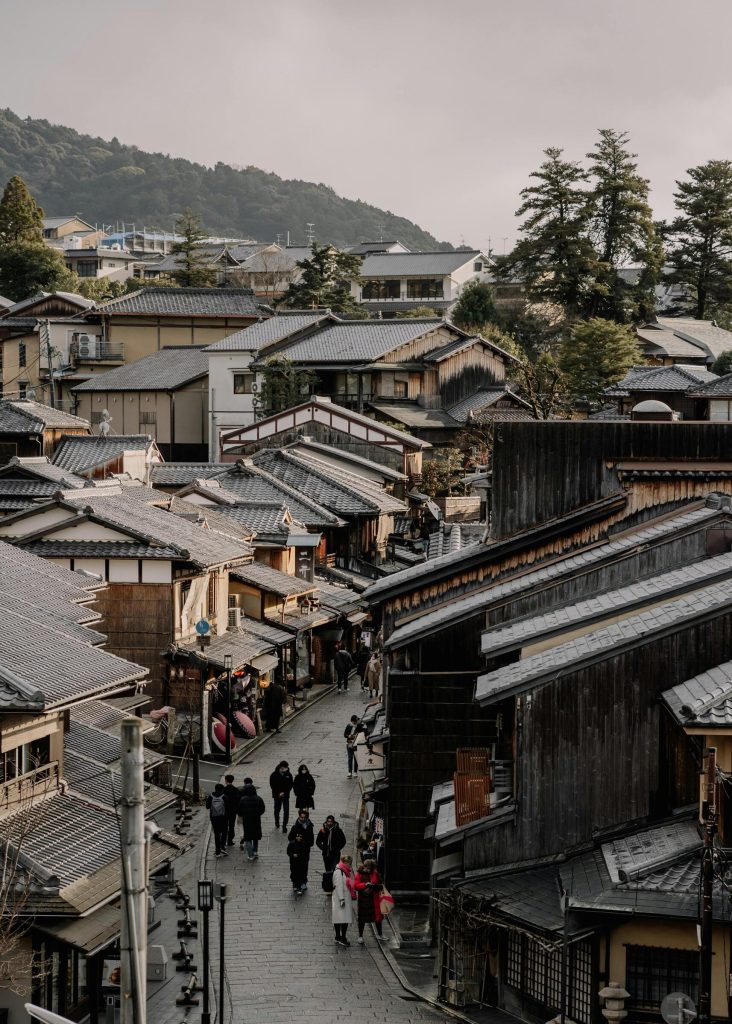
Kyoto by Carlo Obrien
What Europe Might Learn from Kyoto
Europe often celebrates rupture – revolutions, renaissances, dramatic turns. Kyoto celebrates refinement. It shows that civilization is not only created through upheaval. It can also be maintained through care. Through repetition. Through continuity. Through small acts performed well, again and again, for centuries.
The Art of Waiting
March in Kyoto is a threshold month. The blossoms are coming but not yet. The light is softer but not fully warm. The transformation is visible but incomplete. And perhaps this is why Kyoto is our Cultural Capital of March. Because waiting is not passivity.Waiting is preparation. Waiting is attention. Waiting is culture choosing to endure.
Related Posts