Valencia in Flames: The Living Art of Las Fallas
By ANNO Media
In March, Valencia becomes a city of fire.
Not metaphorically, but quite literally. Streets fill with towering sculptures, explosions echo through the air at midday, silk dresses shimmer under the Mediterranean sun, and on the night of March 19, everything burns.
This is Las Fallas, one of Europe’s most extraordinary cultural phenomena, where art is created not to be preserved, but to disappear.
From carpenters’ fires to a cultural masterpiece
The origins of Las Fallas lie in a humble and almost poetic gesture.
On the eve of Saint Joseph’s Day, Valencia’s carpenters would burn old wooden lampstands (parots), that had lit their workshops during the winter months. With longer daylight returning, these objects were no longer needed.
Fire marked transition:
Over time, these simple bonfires evolved. By the 17th and 18th centuries, the parotswere dressed, given faces, turned into characters. What began as ritual became expressionб often humorous, sometimes critical. Neighbors, clergy, politicians: no one was entirely safe from satire.
By the 19th century, Las Fallas had transformed into a full artistic movement. Sculptures grew in scale and ambition. Entire scenes were constructed – theatrical, ironic, and deeply reflective of society.
Today, the festival is recognized by UNESCO as Intangible Cultural Heritage of Humanity, yet it remains, at its core, profoundly local.
A city turned into a stage
During Fallas, Valencia ceases to be merely a city. It becomes a living stage.
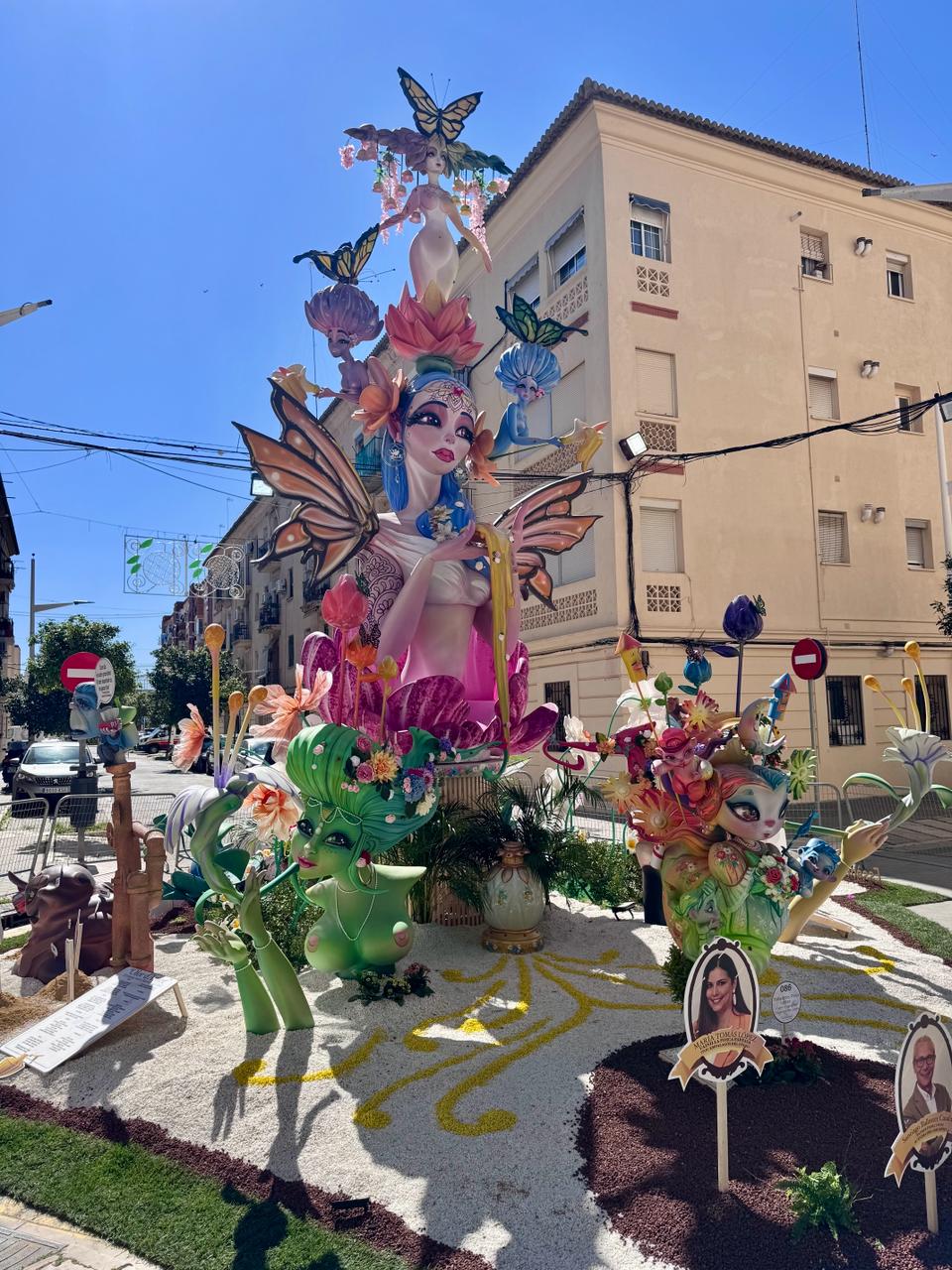
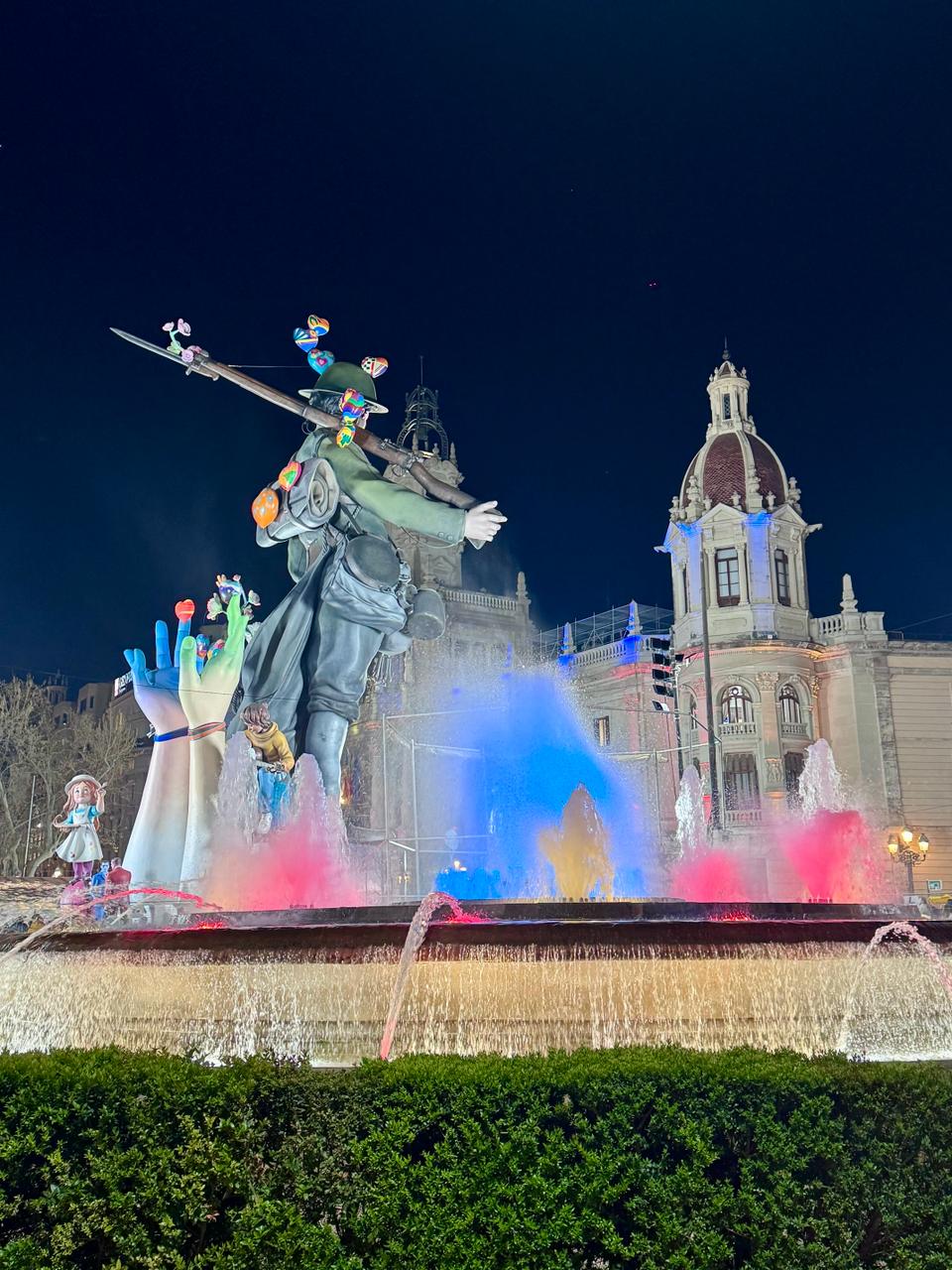
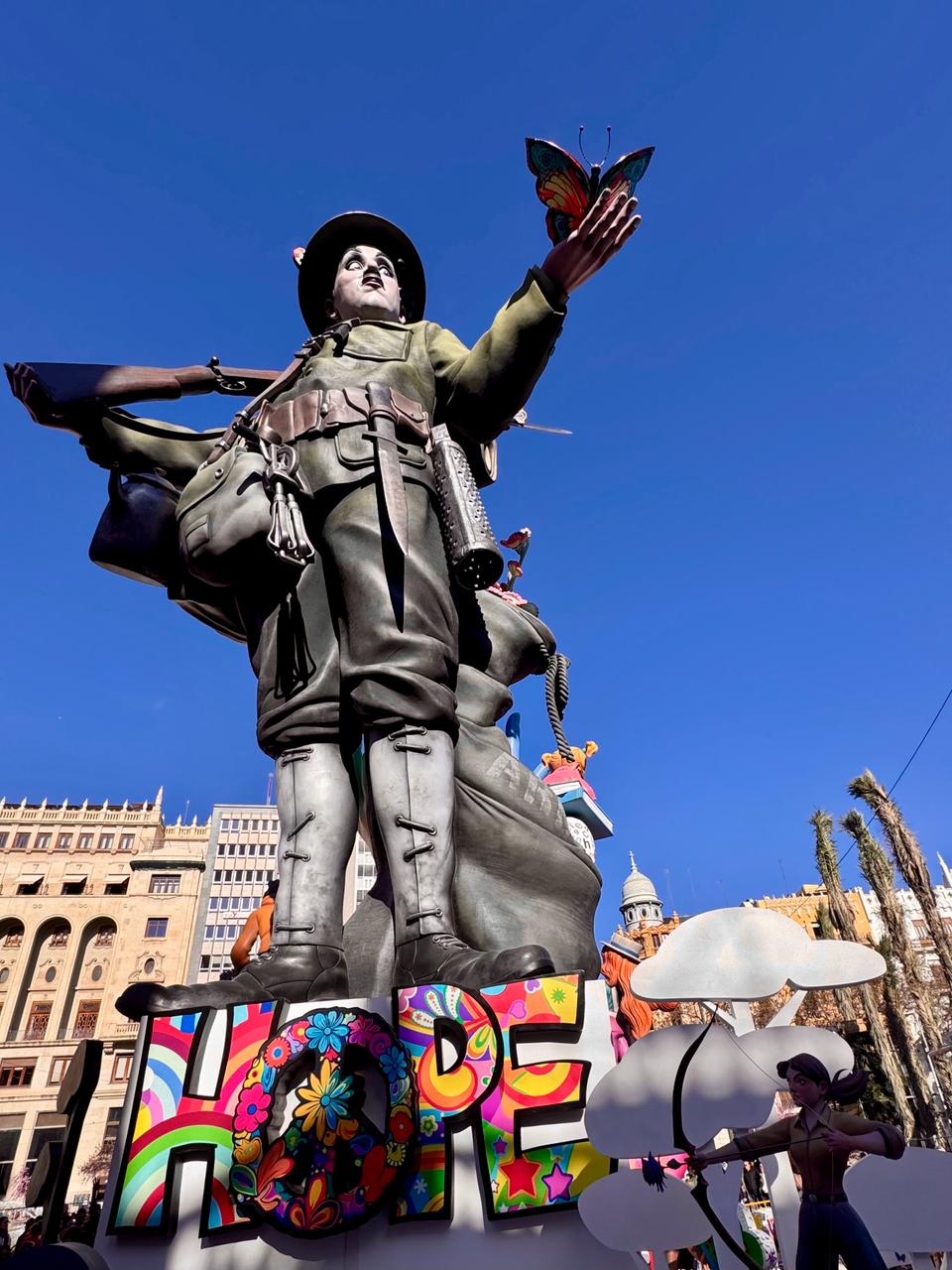
Each neighborhood creates its own falla, a monumental installation composed of multiple figures (ninots), often reaching several stories in height. These are not static sculptures; they are narratives:
They invite laughter, provoke thought, and sometimes spark controversy. And then, they vanish.
The rhythm of sound and fire
Every day at 14:00, the city gathers for the mascletà.
It is not a visual spectacle, but an acoustic one, a carefully orchestrated sequence of explosions where rhythm matters more than light. The ground trembles, the air vibrates, and for a few minutes, the city breathes in unison.
At night, fireworks take over the sky, while the streets remain alive, almost timeless in their energy.
Tradition in motion
Amid the flames and noise, there is also elegance.
The falleras, women dressed in richly embroidered silk gowns inspired by 18th-century Valencian fashion, move through the city like figures from another era. Their presence anchors the festival in continuity, reminding us that Fallas is not only about spectacle, but about identity.
It is a celebration passed down through generations, embedded in families, neighborhoods, and memory.
La Cremà: beauty in disappearance
On the night of March 19, everything reaches its conclusion.
One by one, the fallas are set on fire.
What has taken months, sometimes an entire year to design and build is consumed in minutes. Flames rise, colors dissolve, forms collapse into ash.
Only one figure, the ninot indultat, chosen by popular vote is spared. The rest is gone.
The philosophy of Fallas
Las Fallas is more than a festival. It is a philosophy.
In a world that seeks to preserve, archive, and collect, Fallas offers a different perspective:
There is something deeply theatrical in this, reminiscent of ballet itself, where the most extraordinary performances exist only in the moment they are lived.
For a cultural observer, it raises a quiet but powerful question: What is the value of art if not in its duration, but in its impact?
A living community
Perhaps the most important dimension of Las Fallas is not the fire, nor the sculptures, nor even the spectacle.
It is the people.
Each falla is organized by a local community (a casal fallero), where families gather, plan, celebrate, and pass traditions from one generation to the next. Children grow into participants, participants into custodians.
It is, in essence, a social ecosystem, one that binds the city together.
Valencia, once a year and forever
To experience Las Fallas is to witness a paradox:
A city builds masterpieces only to destroy them.
A tradition rooted in the past feels intensely present.
A festival of fire becomes a meditation on memory.
And perhaps that is why it lingers. Not in the sculptures, but in those who have seen them burn.
Related Posts