Cultural Capital of June: Saint Petersburg The City That Refuses the Night
There are cities that impress you with their scale. There are cities that seduce you with their beauty. And then there are cities that lodge themselves permanently inside the imagination — cities that continue to live in the mind long after you have left them, cities that become, in some essential way, part of how you understand the world. Saint Petersburg belongs to this last and rarest category, and it belongs there with an authority that few places on earth can claim.
Every June, something extraordinary unfolds in Russia’s most luminous city. The ordinary laws of darkness and day seem to loosen their grip. The sun retreats so reluctantly below the horizon that the sky never truly darkens. Midnight resembles a long summer evening. Dawn arrives before the city has thought of sleeping. For several weeks each year, Saint Petersburg enters its most poetic and celebrated season: the White Nights. It is for this reason — and for the extraordinary depth of cultural life that thrives here year-round — that ANNO Media selects Saint Petersburg as its Cultural Capital of June 2026.
A City Born from an Impossible Dream
Most of Europe’s great cities emerged gradually over centuries, growing organically around rivers, trade routes, ancient fords, and medieval walls. Their identities accumulated slowly, layer upon layer, the sediment of generations. Saint Petersburg was entirely different. It was not grown but conceived — not accumulated but willed into existence through an act of extraordinary, almost reckless ambition.
When Tsar Peter the Great founded the city in 1703, he was doing far more than establishing a new administrative capital. He was creating a vision, a statement, an argument about what Russia could become. Facing westward toward Europe, the new city was intended to be a bridge between civilisations — a place where Russian traditions and the intellectual currents of the European Enlightenment could meet, combine, and produce something unprecedented. The very act of naming the city in Dutch rather than Russian, and populating it with architects, engineers, and artists from across the continent, announced Peter’s ambitions to the world.
The location itself seemed almost perverse in its improbability. The marshy delta of the Neva River, scattered across dozens of islands, subject to violent floods, swept by icy winds off the Gulf of Finland — this was hardly the obvious site for an imperial metropolis. Tens of thousands of workers died during the construction years, many of them serfs conscripted from across Russia, laboring in conditions of extreme hardship to realise the tsar’s dream. The human cost was immense and cannot be forgotten.
Yet within a century, palaces of extraordinary splendour lined the banks of the Neva. Canals threaded their way across islands, earning the city early comparisons to Venice and Amsterdam. Architects from Italy, France, Scotland, and Russia transformed the northern marshland into one of the most harmonious and astonishing urban ensembles in the world. The Italian Bartolomeo Rastrelli gave the city the magnificent Winter Palace and the exuberant Smolny Cathedral. The Scotsman Charles Cameron designed elegant neoclassical interiors at Tsarskoe Selo. The Russian Karl Rossi composed the sweeping General Staff Building arc that embraces Palace Square with such serene confidence. Even today, arriving in Saint Petersburg feels less like entering a city than stepping into a meticulously composed stage set — and perhaps that is precisely why artists have always felt so profoundly at home here.
The White Nights
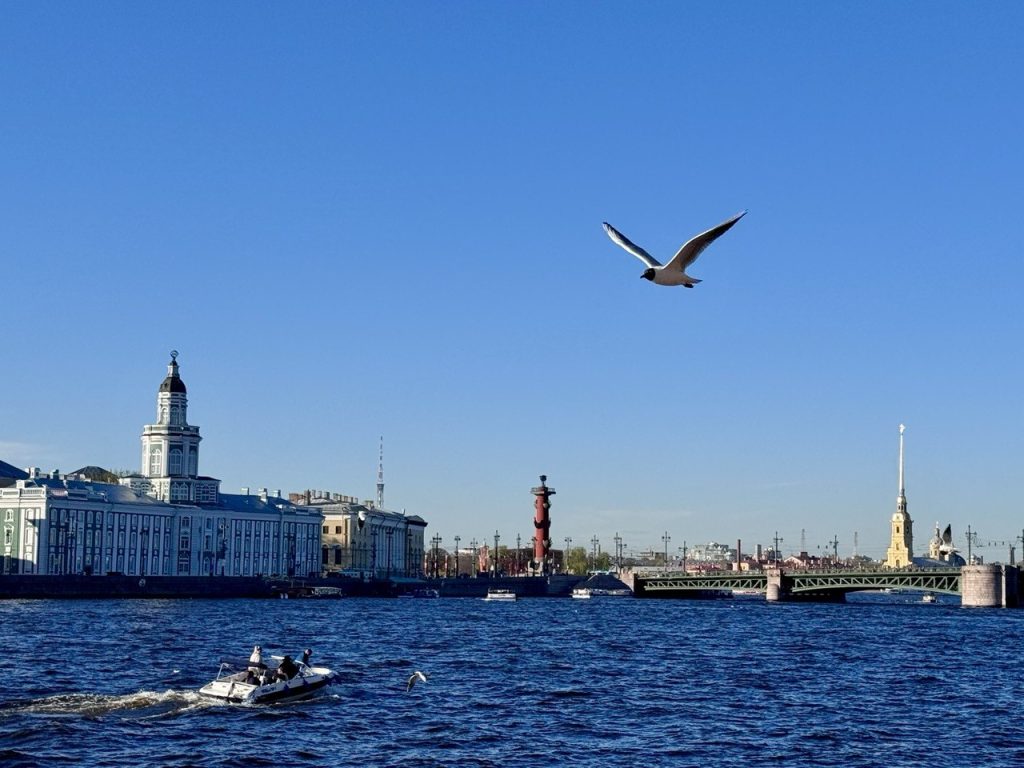
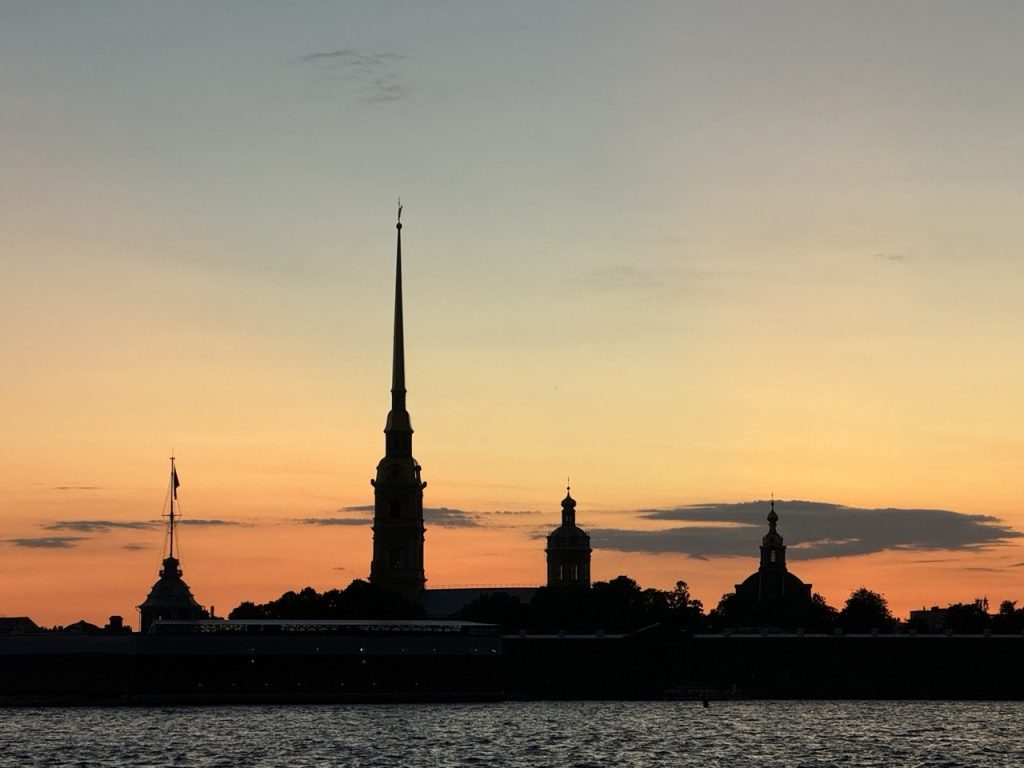
There are few natural phenomena that become, over time, cultural phenomena. The White Nights of Saint Petersburg are among the most remarkable exceptions. Around the summer solstice, at this northern latitude of approximately sixty degrees, the sun dips only fractionally below the horizon. The sky never reaches true darkness. Instead, the city is bathed for hours in a luminous silver-blue twilight — neither quite day nor quite night, a quality of light that seems to belong to no ordinary category of experience.
The effect is difficult to describe to those who have not witnessed it, and those who have often struggle to convey the peculiar emotional register it induces. At eleven o’clock in the evening, people stroll along the embankments as they might on a late afternoon in more southerly cities. At midnight, musicians perform in public squares and the reflections of palaces shimmer in the Neva. At one in the morning, the facades of Baroque and neoclassical buildings still glow softly beneath the luminous northern sky, and the bridges over the river are raised to allow the passage of cargo ships — a sight of extraordinary beauty, the great iron spans lifting against the luminous sky while small crowds gather at the riverbanks to watch.
The psychological effect of the White Nights is real and well-documented. Sleep becomes elusive, even for those who welcome it. The body’s natural rhythms, calibrated to the alternation of darkness and light, become uncertain. A holiday feeling settles over the city, a sense that ordinary constraints have been temporarily suspended. The city seems suspended between day and dream, between history and possibility.
For generations of writers, composers, and painters, the White Nights have represented far more than a meteorological curiosity. They have become a symbol — of longing, of transformation, of the peculiar northern romanticism that runs like a thread through Russian culture. No one captured this atmosphere more hauntingly than Fyodor Dostoevsky in his early novella White Nights, in which a lonely young man encounters a mysterious young woman during this season of perpetual twilight, and reality itself seems softened and made permeable by the strange light. The novel reads like a love letter to Saint Petersburg as much as a work of fiction, and its atmosphere is one that any visitor to the city in June will immediately recognise. The White Nights are not merely observed in Saint Petersburg. They are lived, felt, and remembered long after the darkness returns.
The City of Two Annas
For readers of ANNO Media, Saint Petersburg holds a particular significance that goes beyond its architectural magnificence or its meteorological peculiarities. It is the city of two remarkable women whose lives and work continue to resonate far beyond the borders of Russia, and whose names carry a special resonance for our publication: Anna Pavlova and Anna Akhmatova.
At first glance they appear to inhabit entirely different worlds. One spoke through movement — through the disciplined, endlessly refined language of the body in classical dance. The other spoke through words — through the compressed, luminous, emotionally devastating precision of lyric poetry. One conquered international stages from London to Buenos Aires, bringing classical ballet to audiences who had never seen it before. The other transformed the Russian poetic tradition with a voice of such clarity and moral authority that it endured through revolution, personal catastrophe, and decades of repression. Yet both emerged from the same cultural atmosphere, shaped by the same extraordinary artistic energy that characterised Saint Petersburg during the final, brilliant, and ultimately doomed decades of the Russian Empire.
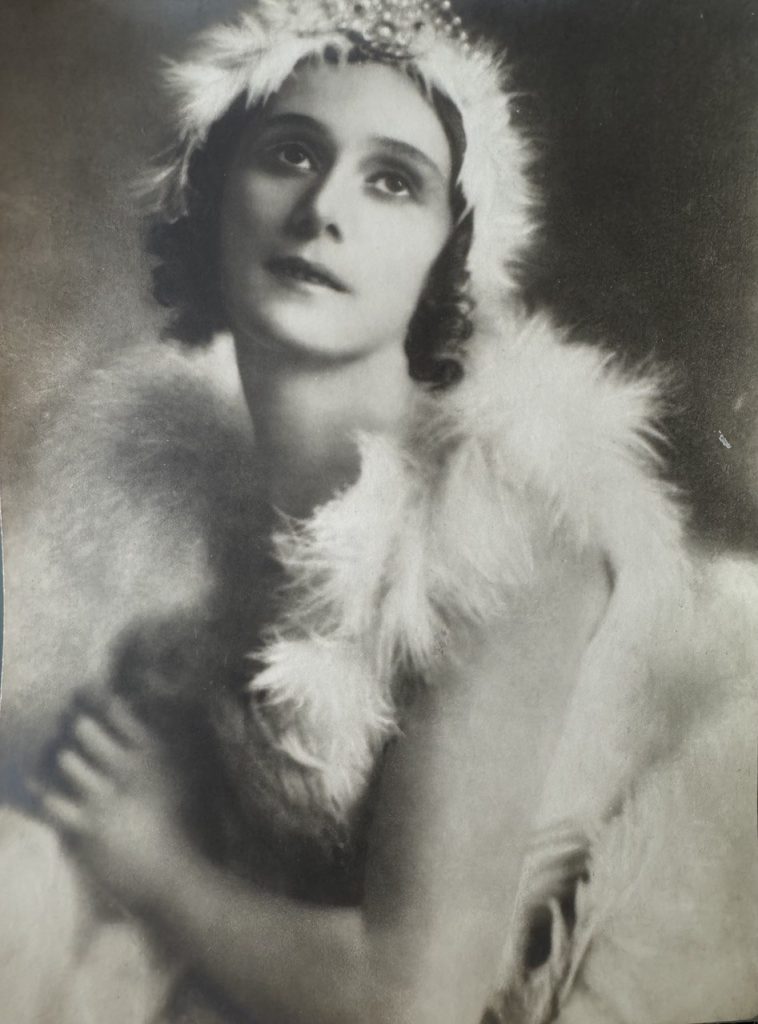
Anna Pavlova was born in Saint Petersburg in 1881 and entered the Imperial Ballet School at the age of ten. Her training at what would later become the Vaganova Academy — that extraordinary institution on Theatre Street whose methods shaped generations of the world’s finest dancers — prepared her for a career at the Mariinsky Theatre. But Pavlova’s ambitions exceeded the imperial stage. She became, through relentless and visionary touring that took her to over forty countries, the first truly global ballet star. She performed in remote towns and grand capitals alike, insisting that classical dance was not the exclusive property of wealthy audiences in great cities but a universal art form capable of speaking to all of humanity. She brought the spirit of Saint Petersburg’s ballet tradition to every corner of the inhabited world.
 Anna Akhmatova was born in 1889 near Odessa but came to Saint Petersburg as an infant and spent the defining years of her life in the city she would love with painful and enduring devotion even as it was renamed, besieged, and transformed around her. Her early collections Evening, Rosary, and White Flock established her as one of the supreme voices of the Acmeist movement in Russian poetry — a movement that prized clarity, concreteness, and emotional precision over the mystical abstractions of Symbolism. But her greatest work came later, forged in the crucible of suffering. Her long poem Requiem, composed in fragments during the years of Stalin’s terror and committed to memory by trusted friends because it was too dangerous to commit to paper, stands as one of the defining works of twentieth-century literature — a monument to the women who stood in prison queues outside Leningrad’s ‘Kresty’ prison, waiting for news of their arrested sons and husbands. Akhmatova endured the deaths of those she loved, the imprisonment and execution of her former husband Nikolai Gumilev, the repeated arrests of her son, official suppression of her work, and decades of poverty and anxiety. She endured all of this without leaving the city she called home. Her loyalty to Saint Petersburg — her refusal to abandon it, even when exile might have made her life immeasurably easier — became itself a form of witness.
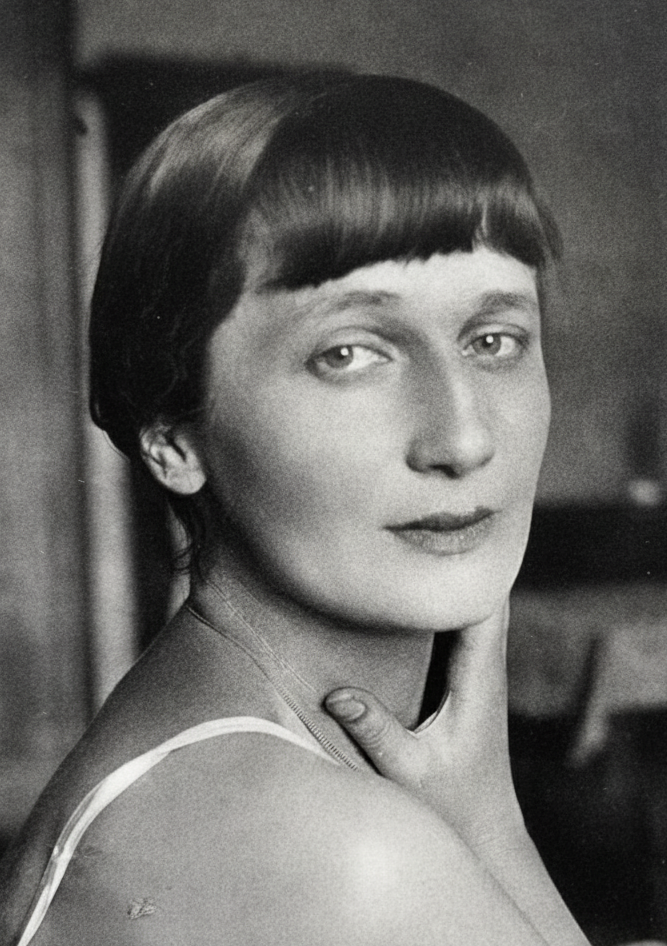
The paths of the two Annas rarely crossed directly, and their artistic worlds were distinct. Yet both belonged to the same extraordinary moment in the history of Saint Petersburg’s culture — a moment when art was not simply entertainment or ornament but a way of understanding and enduring existence itself. Both carried the spirit of the city far beyond its borders. And both left behind legacies that continue to speak with urgent, undiminished force to audiences everywhere.
The Silver Age: An Artistic Revolution
To understand Saint Petersburg fully — to grasp why it has produced such a disproportionate share of the world’s most significant artists, writers, composers, and dancers — it is necessary to understand the remarkable cultural explosion that historians and critics have come to call the Silver Age of Russian culture. Spanning roughly the final two decades of the nineteenth century and the first two decades of the twentieth, this period saw Saint Petersburg become one of the great artistic laboratories of Europe, a place where convention was questioned, tradition was reinvented, and the boundaries between art forms were joyfully transgressed.
Poets reinvented the Russian language, pushing it toward new registers of precision and beauty. The Symbolists — Alexander Blok, Konstantin Balmont, Valery Bryusov, Andrei Bely — sought to make poetry a vehicle of mystical revelation, a medium through which the invisible realities underlying the visible world might be glimpsed and named. Against them, the Acmeists — Akhmatova, Gumilev, Osip Mandelstam, Mikhail Kuzmin — insisted on the supreme importance of the concrete, the specific, the lovingly observed particular detail. The arguments between these movements were conducted with passionate intensity, in the pages of literary journals, in public lectures, and in the salons and gatherings that proliferated throughout the city during these years.
Composers of extraordinary originality emerged from Saint Petersburg’s musical culture. Alexander Scriabin pursued a visionary project of artistic synthesis, attempting to unite music, color, and philosophy in a cosmic art form. Igor Stravinsky, a student of Rimsky-Korsakov in Saint Petersburg, would go on to transform the entire landscape of twentieth-century music with works including The Firebird, Petrushka, and The Rite of Spring — all created, initially, in the orbit of the city’s cultural life.
Perhaps most spectacularly of all, it was from Saint Petersburg that Sergei Diaghilev launched the Ballets Russes in 1909, an enterprise that would transform not just dance but the visual arts, music, fashion, and theatrical design across the Western world. Diaghilev gathered around him an astonishing constellation of talent — Stravinsky, Prokofiev, Nijinsky, Pavlova, Fokine, the painters Léon Bakst and Alexandre Benois — and with this collective created a series of productions that shocked, dazzled, and permanently altered the European cultural imagination. The legacy of the Ballets Russes can be traced in everything from the visual language of modern advertising to the conventions of contemporary theatrical design. And it had its roots in the salons and studios and passionate arguments of Saint Petersburg during the Silver Age.
The atmosphere of these years was electric with possibility and shadowed by premonition. Many of the artists who shaped the Silver Age seemed to sense, even amid the brilliance and excitement, that the world they inhabited was fragile, that the social and political structures sustaining their remarkable cultural flowering were under terrible pressure. The revolutions of 1905 and 1917, the First World War, the subsequent Civil War, and the consolidation of Soviet power brought this extraordinary period to a violent and definitive end. Some artists emigrated. Others were imprisoned, executed, or silenced. The Silver Age was over. But its effects were irreversible, and its echoes are visible throughout the city’s cultural life to this day.
The Mariinsky and the Art of Movement
No cultural portrait of Saint Petersburg would be complete without sustained attention to the Mariinsky Theatre, which has stood for more than a century and a half among the world’s supreme stages, a house whose history encompasses imperial patronage, artistic revolution, the upheavals of revolution and war, and a remarkable series of subsequent renewals and rebirths.
The original theatre building, designed by Alberto Cavos and opened in 1860, established from the beginning an atmosphere of particular distinction — intimate enough to create a sense of direct connection between performer and audience, grand enough to do justice to the most ambitious productions in the operatic and balletic repertoire. Its sea-green and gold interior, restored to its original splendour in recent decades, remains one of the most beautiful theatrical spaces in the world.
For lovers of classical ballet, the Mariinsky occupies a position approaching the sacred. It was here that the great choreographer Marius Petipa, working over a career of extraordinary length and productivity, created or restaged the canonical works of the nineteenth-century balletic repertoire: Swan Lake (in collaboration with Tchaikovsky), The Sleeping Beauty, The Nutcracker, La Bayadère, Don Quixote, Raymonda, and many others. These works, first performed on the Mariinsky’s stage, remain the foundation of the classical ballet tradition worldwide. Every major ballet company on earth owes a fundamental debt to what Petipa and his collaborators created in Saint Petersburg during the second half of the nineteenth century.
The generations of legendary dancers who trained and performed here constitute a roster of extraordinary distinction. Mathilde Kschessinska, Anna Pavlova, Tamara Karsavina, VaslavNijinsky, George Balanchine, Rudolf Nureyev, Mikhail Baryshnikov, Natalia Makarova — these names, and many others associated with the Mariinsky and its predecessor institutions, represent the highest peaks of achievement in the art of classical dance. Many of them went on, through emigration or tours or institutional influence, to shape ballet traditions on every continent.
Today, the Mariinsky — now comprising the original historic building, the striking contemporary Mariinsky II, and the Mariinsky Concert Hall housed in a magnificently converted former warehouse — remains one of the most vital and productive performing arts institutions in the world. Under the long artistic directorship of Valery Gergiev, the company has maintained exceptional standards in both opera and ballet while expanding its repertoire and its reach. A visit to a performance at the Mariinsky during the White Nights season — when the theatre’s exterior glows against the luminous summer sky and the city’s celebratory atmosphere fills the auditorium — is one of the great cultural experiences available anywhere on earth.
Architecture as Philosophy
One of the most striking things about Saint Petersburg, for the visitor arriving from almost any other great European city, is the quality of coherence that pervades its urban fabric. This is not an accident of geography or a product of gradual historical accumulation. It is the result of deliberate, sustained, and extraordinarily successful urban planning over a period of more than two centuries.
The city was built according to explicit aesthetic principles, and those principles — prioritising harmonious proportions, restrained ornament, the relationship between buildings and the vast sky above them, and the integration of architecture with water — were applied with remarkable consistency across a wide range of building types and historical periods. The result is a cityscape of quite exceptional visual integrity.
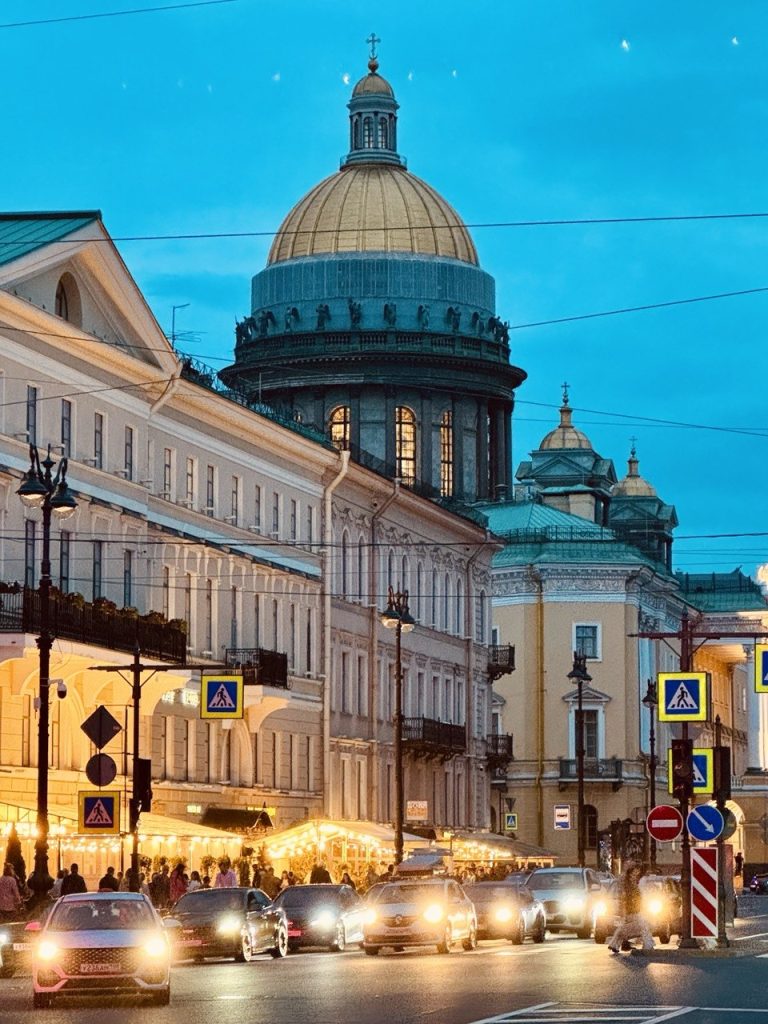
The Palace Embankment, stretching for several kilometres along the south bank of the Neva, presents one of the most magnificent urban facades in the world. The Winter Palace, with its jubilant Baroque exuberance — Rastrelli’s masterpiece, painted in the distinctive aquamarine and white that the city has made its own — anchors one end of this sequence. The Hermitage complex, which incorporates the Winter Palace itself along with several adjacent buildings, now houses one of the greatest art collections on earth: more than three million objects accumulated over three centuries of imperial patronage and Soviet expansion, including works by Leonardo, Raphael, Michelangelo, Rembrandt, Caravaggio, Velázquez, Matisse, and Picasso. One could spend months in the Hermitage and still feel that one had only scratched the surface.
Beyond the grandeur of the embankments and major squares, the city rewards the kind of unhurried, curious exploration that great urban environments always invite. Hidden courtyards open unexpectedly behind monumental facades. Quiet canals reflect the painterly sky. Independent bookshops occupy former aristocratic apartments. Small museums of extraordinary specialisation — dedicated to a single writer, a particular period, a specific craft tradition — offer intimate encounters with the city’s layered history. Former industrial spaces have been converted into art venues, cultural centres, and restaurants of considerable inventiveness. The city is always more than it first appears, always deeper, always more various, always more human in scale than its imperial ambitions might suggest.
Pushkin, Dostoevsky, and the Literary Imagination
Saint Petersburg is, among its many other identities, one of the most intensely literary cities on earth. It is a city that has been written about with such sustained power and imaginative intensity that the literary Saint Petersburg and the physical Saint Petersburg have become, for many of its most devoted visitors, almost inseparable.
Alexander Pushkin, Russia’s supreme poet and the founding figure of its modern literary tradition, spent significant periods of his life in Saint Petersburg and died there in 1837 following a duel. His apartment on the Moika embankment, preserved as a museum, gives visitors an unusually direct sense of the world he inhabited — the books he was reading in his final weeks, the desk at which he worked, the sofa on which he died. Pushkin’s Saint Petersburg — of masked balls and gambling dens, of the Bronze Horseman rearing against the flood-lit sky, of the mad clerk Evgeny pursuing the equestrian statue through the night — established the terms through which the city would be imagined for generations to come.
Fyodor Dostoevsky lived most of his adult life in Saint Petersburg, and the city is written into virtually every page of his mature fiction. The Saint Petersburg of Crime and Punishment — of cramped stairwells and sweltering attics, of bridges and canals and the yellow sky pressing down upon the crowded streets — is a city of psychological intensity, a city in which the boundaries between inner and outer experience have become dangerously permeable. Visitors who come to the city with Dostoevsky’s novels in their mental luggage will find the experience of walking its streets unusually charged: the Haymarket where Raskolnikov confesses, the street where the moneylender lived, the canal bank where guilt and conscience play out their terrible drama — all of these can still be located, still visited, still felt.
The literary tradition that Pushkin and Dostoevsky established was continued, in different registers and with different emphases, by Nikolai Gogol, Ivan Turgenev, Nikolai Nekrasov, and then by the extraordinary generation of the Silver Age. Akhmatova’s Saint Petersburg — precise, beautiful, heartbroken, enduring — belongs to this tradition while also transcending it, because Akhmatova was not simply writing about a city but writing about history itself, using the city as the ground on which the drama of the twentieth century was played out.
A City of Memory
Many cities celebrate their triumphs. Saint Petersburg does something more demanding and more honourable: it also remembers its tragedies. The Siege of Leningrad — as the city was known from 1924 to 1991, the years of the Soviet period — remains one of the defining catastrophes of the twentieth century, and one of its most extraordinary stories of collective human endurance.
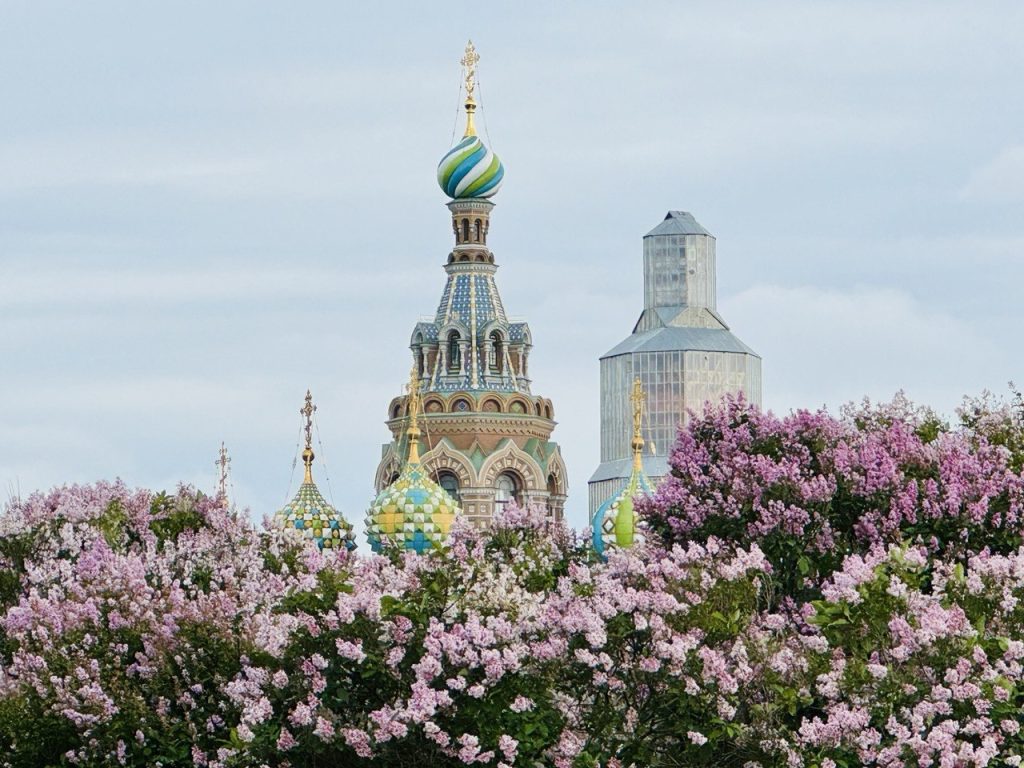
From September 1941 to January 1944, German and Finnish forces encircled the city in a blockade of deliberate starvation. More than a million civilians died during those 872 days — from hunger, from cold, from bombardment, from exhaustion and disease. The daily ration at the worst point of the blockade fell to 125 grams of bread — barely enough to keep a person alive — and for many it was not enough. People died in the streets. Families perished in their apartments. Children continued to attend school as shells fell on the city. The Philharmonic gave concerts. The Hermitage mounted an exhibition in its emptied rooms, around the ghostly outlines where the evacuated masterpieces had hung. The city refused to surrender.
The memory of the siege is woven into the urban fabric of contemporary Saint Petersburg with a depth and specificity that visitors from cities without comparable experience of modern warfare sometimes find unexpected and affecting. The Piskaryovskoye Memorial Cemetery, where nearly half a million victims of the siege are buried in mass graves, is a place of extraordinary solemnity and sorrow. Memorial plaques on buildings throughout the city record the spots where people fell during bombardments. Museums preserve the evidence of what was endured and how it was endured. Family stories, passed down through generations, maintain the living memory of those years. The result is a city with an unusually profound historical consciousness — a city in which the past is never entirely past, in which every walk through the streets takes place against the background of what has been suffered and survived here.
Music, Beyond the Mariinsky
The musical life of Saint Petersburg extends far beyond, though it has its supreme centre in, the Mariinsky. The city is home to a rich and varied concert life that encompasses the Saint Petersburg Philharmonic — one of the world’s great orchestras, whose home in the magnificent Shostakovich Philharmonic Hall on Arts Square has been the site of some of the most significant musical events of the twentieth century — as well as numerous chamber ensembles, choral groups, jazz clubs, and contemporary music venues.
Dmitri Shostakovich, perhaps the most significant Russian composer of the Soviet era, was born in Saint Petersburg in 1906 and maintained a complex and tortured relationship with the city throughout his life. His Seventh Symphony, the ‘Leningrad’ Symphony, was composed in part during the siege and first performed in the besieged city in August 1942 — broadcast on loudspeakers and relayed across the front lines, an act of cultural defiance of extraordinary symbolic power. The Philharmonic Hall where his music is still regularly performed bears his name, a recognition that feels entirely appropriate given the depth of the connection between his music and the city’s experience.
The tradition of musical education in Saint Petersburg is of exceptional quality and exceptional antiquity. The Saint Petersburg Conservatory, founded in 1862 by Anton Rubinstein as the first conservatory in Russia, has produced generations of musicians of world stature. Tchaikovsky studied and later taught here. Rimsky-Korsakov and Alexander Glazunov led the institution during its most influential period. The technical and interpretive standards instilled by this tradition continue to shape musical performance worldwide.
The Museums: Beyond the Hermitage
The Hermitage is, inevitably, the first name on any list of Saint Petersburg’s museums — and rightly so, since it is one of the supreme repositories of human artistic achievement. But to treat the Hermitage as though it were the whole story of Saint Petersburg’s museum culture would be to miss an extraordinary wealth of more intimate and specialised institutions that together give the city an unparalleled depth of cultural provision.
The Russian Museum, housed in the magnificent Mikhailovsky Palace and its adjacent buildings, holds the world’s most comprehensive collection of Russian art from medieval icons through the twentieth-century avant-garde. Its holdings of nineteenth-century Russian painting — Repin, Surikov, Levitan, Vrubel, Serov — are of outstanding quality and provide an essential complement to the Western European focus of the Hermitage. The canvases of Ilya Repin, particularly, reward sustained attention: his vast historical compositions and his psychologically penetrating portraits constitute one of the great achievements of nineteenth-century painting anywhere in Europe.
The Fabergé Museum, opened in 2013 in the beautifully restored Shuvalov Palace, houses the world’s largest collection of works by the House of Fabergé, including nine of the famous Imperial Easter Eggs created for the Russian imperial family. Whatever one thinks of the objects themselves — and they can be seen as supreme achievements of decorative craftsmanship or as emblems of extravagance depending on one’s perspective — the museum provides a vivid window onto the culture of the late imperial period.
The literary museums of Saint Petersburg deserve particular mention. The Pushkin apartment museum, the Dostoevsky House, the Akhmatova Museum in the Fountain House — that complex of apartments on the Fontanka embankment where Akhmatova lived for decades and received visitors including Isaiah Berlin during the extraordinary wartime encounter that she later commemorated in her Poem Without a Hero — all offer extraordinarily immediate encounters with the lives and creative processes of the city’s most important writers.
Gastronomy and the Contemporary City
It would be a mistake to think of Saint Petersburg exclusively through the lens of its imperial and Soviet past, magnificent and complex as that past undeniably is. The city is also vigorously, inventively, and increasingly self-confidently contemporary, and nowhere is this more apparent than in its rapidly evolving food and hospitality culture.
The past decade and a half has seen the emergence of a genuinely distinctive Saint Petersburg restaurant scene — one that draws on the city’s northern geography and its access to exceptional ingredients from the Baltic, the Gulf of Finland, the forests of Karelia, and the dairy-farming regions around the city, while engaging with the best traditions of Russian and Soviet-era cooking with a mixture of affection, irony, and creative reinvention. Smelt — the small, cucumber-scented fish that the city has celebrated each spring since time immemorial — white nights pike-perch, Karelian pastries, wild mushrooms, and excellent local dairy products all feature in a contemporary gastronomic landscape that ranges from innovative tasting menu restaurants to excellent Georgian and Central Asian establishments to lively food markets that have revitalised formerly industrial quarters of the city.
The café culture of Saint Petersburg has always been closely bound up with its literary and artistic life — the legendary café Dom Literatorov, the Stray Dog cabaret where the poets of the Silver Age gathered, the various establishments that provided gathering places for the city’s creative intelligentsia in different periods — and this tradition continues in contemporary form. Independent coffee shops, bookshop cafés, art space bars, and neighbourhood restaurants have colonised the former manufacturing districts of Vasilievsky Island and the Vyborg Side, creating new cultural geographies alongside the imperial centre.
Why June? Why Now?
One could, of course, visit Saint Petersburg at any time of year, and there are compelling arguments for every season. Winter brings the city to a different kind of magnificence: the palaces frosted with snow, the Neva locked with ice, the sky a perpetual blue-grey twilight that perfectly matches the melancholy psychological atmosphere of Dostoevsky’s novels. The literary tourism of winter Saint Petersburg — rugged up against the cold, visiting the places where the great novels were written and set — has its own profound satisfactions. Autumn offers the golden parks of Tsarskoe Selo and Peterhof, misty mornings on the embankments, the first logs burning in café fireplaces. Spring carries the excitement of renewal, the ice breaking on the river, the first brave outdoor diners of the year.
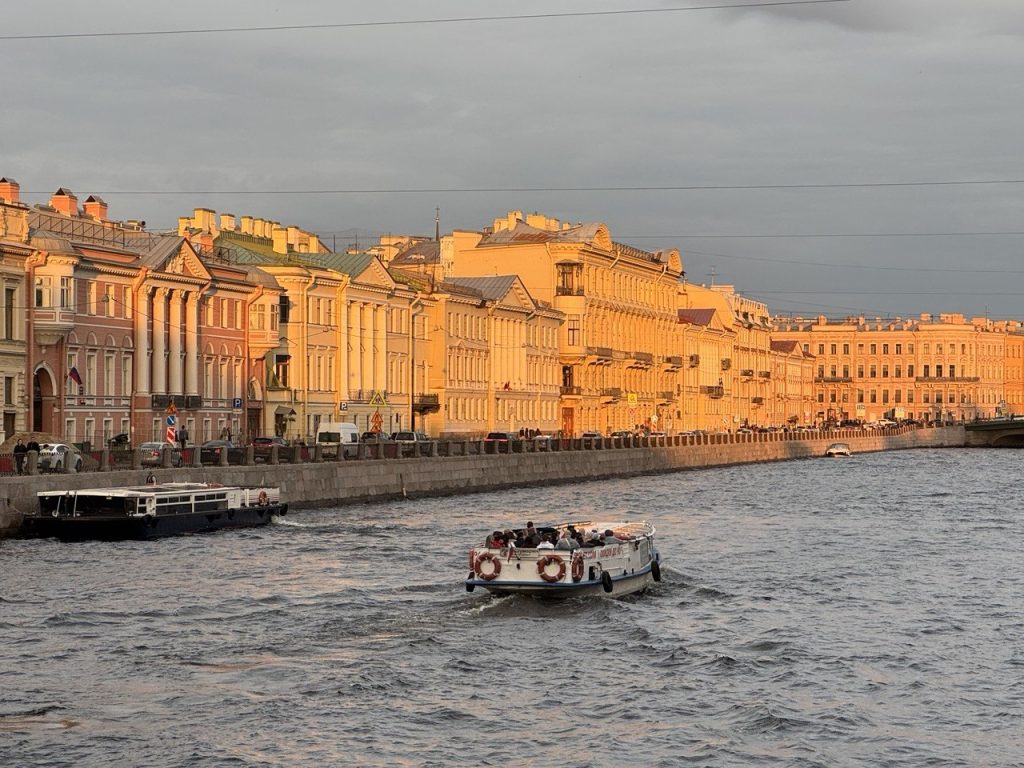
Yet June remains uniquely special — not merely the best season to visit Saint Petersburg, but the season in which the city becomes, in some essential sense, fully itself. The White Nights reveal dimensions of the city’s character that are invisible at other times of year. The luminous sky refracts and amplifies the beauty of the architecture. The extended hours of ambient light allow the city to be explored at times — late evening, night, the small hours of the morning — when urban exploration normally requires artificial illumination and a particular kind of courage. The White Nights dissolve these barriers and invite everyone into a more permissive and more poetic relationship with the city and with time itself.
There is also, in June, an extraordinary calendar of cultural events. The Stars of the White Nights festival at the Mariinsky — one of the world’s great performing arts festivals, bringing to the city a remarkable array of international artists across opera, ballet, and concert music — runs through the month, filling the various Mariinsky stages with performances of the highest quality. The Hermitage and the Russian Museum mount major exhibitions. The city’s theatres, concert halls, and open-air spaces are alive with music and performance. The streets themselves become a kind of theatre, as the distinctive atmosphere of the White Nights draws Saint Petersburgers out of their apartments and into the squares, embankments, and bridges that become, during these weeks, a vast communal stage.
A Final Reflection
Saint Petersburg has been described, in a phrase that is accurate as far as it goes, as Russia’s most European city. The description captures something real about the city’s architectural inheritance, its cultural orientation, and its historical relationship with the rest of the continent. But it is, in important ways, incomplete — and the incompleteness matters.
Saint Petersburg is also one of Europe’s most literary cities — a city whose streets and embankments, whose staircases and courtyards and canal banks, have been imagined with such sustained intensity by so many of the world’s greatest writers that to walk through them is to walk through literature itself. It is one of Europe’s most musical cities, a city whose contribution to the development of opera, ballet, and orchestral music over the past three centuries exceeds that of almost any other urban centre. It is one of Europe’s most theatrical cities, a city whose sense of itself as a kind of permanent performance — a stage set erected against the marshy northern landscape by an act of supreme imperial will — runs through its entire history and continues to shape the way it presents itself to the world. And it is, perhaps above all, one of the world’s most poetic cities, a city whose particular quality of light, whose combination of imperial grandeur and intimate human scale, whose layers of historical memory and cultural achievement, produce in the receptive visitor something approaching the state that the Russian poets called vdokhnovenie: inspiration, the breath of the spirit.
Every June, as darkness retreats to the margin of the calendar and the sky glows above the palaces through the hours that should belong to night, Saint Petersburg performs this act of inspiration with particular intensity. Culture, in this city and in this season, is not confined to museums or theatres, not stored safely behind glass or restricted to the hours when institutions are open. It becomes a landscape, a light, a way of moving through the world. For a few unforgettable weeks each summer, an entire city — with all the weight of its history, all the achievement of its artists, all the suffering of its people, and all the extraordinary beauty of its buildings and its sky — becomes, unmistakably and irresistibly, a work of art.
This is why ANNO Media is honoured to name Saint Petersburg the Cultural Capital of June 2026.
Related Posts